debate

Pope Leo XIV Navigates Complex Migration Imperative

Pontiff's dual appeal to Spanish leaders underscores a nuanced approach to global humanitarian challenges.

Pope Leo XIV urges Spanish leaders to welcome migrants while also supporting their ability to remain in their home countries.
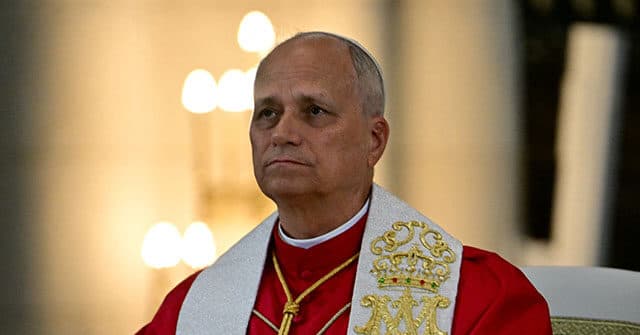
By The Daily Nines Editorial Staff|June 9, 2026|3 Min Read
Pope Leo XIV Navigates Complex Migration ImperativeBlack & White

VATICAN CITY Pope Leo XIV has articulated a profoundly multifaceted appeal to Spanish political figures, advocating for both the compassionate integration of migrants and robust support for individuals to thrive within their native lands. This dual emphasis, delivered amid escalating global displacement, highlights the intricate ethical and logistical quandaries inherent in contemporary migration patterns.

The Pontiff's remarks, widely disseminated and detailed in reports including one by Breitbart.com, underscored the moral imperative for nations to extend hospitality to those seeking refuge and new opportunities. He urged Spanish authorities to approach the influx of people with empathy and solidarity, reflecting the Catholic Church's long-standing tradition of upholding the dignity of every human life, particularly the vulnerable.

Simultaneously, His Holiness unveiled a complementary dimension to his plea, stressing the critical need for governments, particularly those with significant international influence, to invest substantially in initiatives that foster stability, security, and economic prosperity in migrants' countries of origin. This perspective suggests a holistic strategy aimed at addressing the root causes of forced migration, thereby empowering individuals to choose to remain in their homelands rather than being compelled to depart due to adversity.

This seemingly paradoxical stance is not without historical precedent within Vatican diplomacy. It echoes the principles enshrined in various papal encyclicals, which have consistently championed both immediate humanitarian aid and long-term structural justice. The Church's social teachings, from *Rerum Novarum* to *Pacem in Terris*, have often grappled with the responsibilities of states towards their own citizens and the global community, emphasizing solidarity and the common good.

The Pontiff's challenge to Spanish leaders is poised to place the nation's migration policies under renewed scrutiny, particularly as European states continue to navigate the complexities of border management and integration. His message implicitly critiques policies that focus solely on containment or, conversely, those that neglect the foundational issues driving mass movements. The Vatican's position is bolstered by a growing international consensus that sustainable solutions to migration crises demand a comprehensive approach, intertwining humanitarian response with development and peace-building efforts.

By framing the issue with such a nuanced call, Pope Leo XIV underscores that the global migration phenomenon is not merely a matter of border control or economic policy, but a profound humanitarian crisis demanding a two-pronged strategy: immediate compassion for those in transit, coupled with dedicated, long-term investment in the welfare and self-determination of people in their home countries. The Pontiff's words serve as a potent reminder that true solutions must address both the symptoms and the underlying conditions of human displacement.

Originally reported by breitbart.com. Read the original article

In-Depth Insight

What history's greatest thinkers would say about this story

The Dialectical Debate

Seneca

Seneca

Lead Analysis

Stoic Philosopher · 4 BC–65 AD

The Pontiff's dual appeal reflects the Stoic recognition that moral duty extends to all humanity as fellow citizens of the cosmos, requiring both immediate hospitality toward those displaced and prudent investment in distant lands to cultivate stability. True virtue lies not in impulsive generosity alone but in measured actions that address root causes of suffering, fostering self-sufficiency rather than perpetual dependence. This approach aligns with the article's emphasis on solidarity paired with structural support, reminding states that neglecting origins perpetuates cycles of misfortune while unchecked openness risks straining communal resources. A wise policy thus harmonizes compassion with foresight, ensuring aid strengthens rather than undermines the common order.

Confucius

Confucius

Supporting View

Teacher of Virtue · 551–479 BC

To my colleague's point, the Pontiff's stance embodies the principle of benevolent rule, where leaders extend ren through both welcoming the stranger and cultivating prosperity at home. Just as a harmonious state begins with ordered families, nations must balance empathy for migrants with investments that allow peoples to thrive in their native realms, preventing disorder born of desperation. The article's call for dual emphasis mirrors the rectification of names: hospitality without neglecting foundational duties leads to mutual benefit. Spanish authorities, by heeding this, uphold the way of the ancients, fostering global concord through measured solidarity rather than one-sided measures that ignore underlying instabilities.

Jean-Jacques Rousseau

Jean-Jacques Rousseau

Counter-Argument

Social Contract Theorist · 1712–1778

I must respectfully disagree with an exclusive focus on origins as sufficient remedy, for the article reveals how migration stems from artificial inequalities perpetuated by powerful states. While compassion addresses immediate needs, true resolution demands reforming the social contracts that drive displacement, rather than merely patching symptoms through distant investments. The Pontiff's nuance rightly critiques containment alone, yet risks preserving the very structures that compel movement. A balanced approach requires examining how international influence itself shapes adversity, ensuring policies restore natural liberty instead of entrenching dependency under the guise of development.

Cross-Cultural Perspectives

Ibn Khaldun

Ibn Khaldun

Historian and Sociologist · 1332–1406

The Pontiff's call illustrates the rise and fall of asabiyyah, where group solidarity weakens through unchecked migration yet revives when states invest in origin stability. Hospitality must be tempered by measures preserving social cohesion, as the article notes, lest empires erode from within while neglecting the bonds that sustain distant societies.

Aristotle

Aristotle

Philosopher · 384–322 BC

The dual imperative reflects pursuit of the golden mean in policy, blending philia toward newcomers with practical wisdom that strengthens origin polities. As the article describes, virtuous states avoid extremes of isolation or unchecked influx, instead fostering conditions for human flourishing through both immediate aid and long-term justice.

Voltaire

Voltaire

Enlightenment Writer · 1694–1778

Reason demands the tolerance the Pontiff advocates, pairing openness with enlightened investments that reduce fanaticism born of poverty. The article's holistic view counters dogmatic borders or naive universalism, promoting measured policies grounded in evidence rather than prejudice or sentiment alone.

Immanuel Kant

Immanuel Kant

Moral Philosopher · 1724–1804

Cosmopolitan right permits hospitality without conquest, yet perpetual peace requires states to address root causes as the Pontiff urges. The article's two-pronged strategy aligns with duties of justice, ensuring migration reflects choice rather than coercion while respecting each nation's moral autonomy.

Thomas Aquinas

Thomas Aquinas

Theologian · 1225–1274

Natural law supports both charity toward migrants and commutative justice investing in origins, as the article frames. True common good avoids extremes, directing aid toward human dignity so that individuals may remain or depart freely, guided by prudence rather than necessity.

The Socratic Interrogation

Questions for the reader:

1

Does a state's primary duty lie in protecting its existing citizens or in extending resources to foster flourishing elsewhere, and how does one weigh these without eroding either?

2

When policies emphasize both immediate reception and long-term origin investment, what moral limits should guide the allocation of finite national resources between the two?

3

If migration arises from systemic imbalances, to what extent can external aid truly restore self-determination without inadvertently perpetuating new forms of dependence?

The Daily Nines uses AI to provide historical philosophical perspectives on modern news. These insights are intended for educational and analytical purposes and do not represent factual claims or the views of the companies mentioned.