...
·····
world

Pyongyang Accelerates Nuclear Program Amid Global Focus on Iran

By The Daily Nines Editorial StaffApril 17, 20264 Min Read

WASHINGTON — North Korea appears to be significantly accelerating its nuclear weapons development, with a notable uptick in operational tempo observed at its principal atomic facility, even as international diplomatic attention remains largely fixed on broader geopolitical complexities in the Middle East.

This concerning development underscores Pyongyang's persistent pursuit of advanced atomic capabilities, posing a renewed challenge to regional stability and global non-proliferation efforts. The timing of these activities is particularly salient, occurring amid intense international scrutiny of Iran's nuclear trajectory and ongoing discussions regarding its atomic ambitions.

According to recent analyses, including those highlighted by The Wall Street Journal, satellite imagery and intelligence assessments have unveiled compelling indicators of a marked increase in activity at the Yongbyon nuclear complex. This facility, North Korea's primary site for plutonium production and uranium enrichment, is crucial to its weapons program. Such observations suggest that the regime of Kim Jong Un is pushing for rapid progression in its strategic weapons development, potentially moving towards enhancing its existing arsenal or refining its delivery systems.

Pyongyang's nuclear ambitions are not a new phenomenon, having been a consistent and defining feature of its foreign policy for decades. Despite numerous rounds of stringent international sanctions and multilateral negotiations aimed at denuclearization, the reclusive state has continually bolstered its military capabilities. This pattern of defiance has included multiple nuclear tests and a series of ballistic missile launches, repeatedly frustrating international attempts to curb its proliferation activities, a goal enshrined in various United Nations Security Council resolutions. The historical context of North Korea's program reveals a long-standing strategy of leveraging its nuclear status for diplomatic advantage and regime survival.

The mounting evidence of accelerated progress in North Korea's nuclear program serves as a stark reminder of the enduring and evolving threat of proliferation. It further complicates the already precarious security landscape in Northeast Asia, placing immense pressure on neighboring states such as South Korea and Japan, as well as major international powers, to reconsider their strategic responses. The global community is now poised to confront a potentially more formidable nuclear-armed North Korea, necessitating a cohesive and robust diplomatic strategy to prevent further destabilization and ensure adherence to international norms.

Originally reported by Wsj. Read the original article

In-Depth Insight

What history's greatest thinkers would say about this story

Carl von Clausewitz

Carl von Clausewitz

Prussian Military Theorist · 1780–1831

In observing North Korea's accelerated nuclear pursuits, I see war not as a mere act of force but as the continuation of policy by other means, a vortex where political objectives entwine with strategic maneuvering. The regime's defiance amid international sanctions echoes the friction in my writings on the fog of war and the absolute nature of conflict, where states pursue their interests through calculated escalation. Yet, such actions risk engulfing the entire apparatus of state in a perilous dialectic, where the interplay of offense and defense could spiral into broader instability. True mastery lies in comprehending this trinity of passion, chance, and reason, urging diplomats to temper aggression with prudent policy, lest the clash of powers undermine the very foundations of security and order in Northeast Asia.

Adam Smith

Adam Smith

Father of Modern Economics · 1723–1790

The spectacle of North Korea advancing its nuclear program despite global sanctions reveals the invisible hand's dark inversion, where self-interest begets not mutual benefit but perilous isolation. In my treatise on the wealth of nations, I argued that free trade fosters harmony among states, yet here we witness the folly of artificial barriers, as Pyongyang's pursuit of military might disrupts the natural order of commerce and peace. Such defiance underscores the unintended consequences of restrictive policies, potentially impoverishing all parties through escalating tensions. Were nations to embrace the principles of division of labor and open exchange, they might channel these resources toward productive ends, cultivating a global equilibrium that averts the ruinous path of arms proliferation and secures lasting prosperity.

Thomas Paine

Thomas Paine

Radical Political Philosopher · 1737–1809

Behold North Korea's bold assertion of sovereignty through nuclear defiance, a stark echo of the tyrannies I decried in 'The Rights of Man,' where governments oppress for survival at the expense of universal rights. This regime's gamble with atomic weapons mirrors the monarchical abuses that sparked revolutions, leveraging fear to maintain power amid a world demanding reason and equity. Yet, in the spirit of common sense, I urge the global community to unite not in vengeful war, but in principled resistance, promoting the inalienable rights of all peoples through enlightened diplomacy. For true liberty emerges when nations forsake the chains of aggression, forging alliances that uphold human dignity and prevent the spread of despotism's shadows.

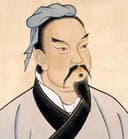
Sun Tzu

Sun Tzu

Ancient Chinese Military Strategist · 544 BC–496 BC

In the shadows of North Korea's nuclear maneuvers, I discern the eternal truths of 'The Art of War,' where supreme excellence lies in breaking the enemy's resistance without fighting, yet here deception and preparation herald potential chaos. The regime employs terrain and alliances as I advised, concealing strengths while probing weaknesses in the global order, much like a general who strikes when the enemy is divided. However, such strategies risk the very deception they wield, for in overreaching, one invites the whirlwind of retaliation. To prevail, adversaries must master indirect approaches, knowing that victory favors not the aggressor, but the one who aligns deception with the subtle art of preserving harmony and forestalling calamity.

Immanuel Kant

Immanuel Kant

Enlightenment Philosopher · 1724–1804

The acceleration of North Korea's nuclear program affronts the categorical imperative of my 'Perpetual Peace,' where nations must act under maxims that could become universal law, fostering a federation to curb the barbaric state of nature among states. This pursuit of weapons, driven by self-preservation, undermines the moral duty to renounce what cannot be willed as a global norm, echoing the folly of treating humanity as a means rather than an end. Yet, in this crisis, reason calls for a cosmopolitan approach, where enlightened republics unite in federated efforts to enforce peace through law, not force, ensuring that rational self-interest aligns with the ethical imperative to secure a world free from the perpetual threat of annihilation.