...
·····
world

Pyongyang Condemns Tokyo's Nuclear Stance

By The Daily Nines Editorial StaffApril 15, 20263 Min Read
Pyongyang Condemns Tokyo's Nuclear StanceBlack & White

GENEVA — North Korea has issued a sharp condemnation of Japan, labeling Tokyo's opposition to its nuclear weapons program as a "grave provocation." This latest rhetorical escalation underscores the persistent fragility of security dynamics across the East Asian theatre, further complicating diplomatic efforts to de-escalate regional friction.

The accusation, emanating from Pyongyang, arrives amid mounting international scrutiny over the Democratic People's Republic of Korea's (DPRK) continued advancement of its ballistic missile and atomic capabilities. Japan, a nation acutely sensitive to the proliferation of weapons of mass destruction given its unique historical experience, has consistently voiced robust disapproval of North Korea's military ambitions. Tokyo's recent expressions of concern and calls for denuclearization have evidently triggered this forceful retort from the reclusive state.

Such strong language from Pyongyang is not uncommon when its nuclear pursuits are challenged. The official communication, reported widely, including by News.com.au, signals a deep-seated resentment towards any perceived interference in its sovereign defense strategy. For decades, North Korea has asserted its right to develop nuclear deterrents, viewing them as essential for its survival against external threats. Japan, conversely, has been increasingly vocal about the direct security risks posed by Pyongyang's tests, which often involve missiles landing within or near its exclusive economic zone. This posture has been bolstered by a renewed focus on regional defense, prompting discussions about Japan's own security architecture in a rapidly evolving geopolitical landscape.

The historical animosity between Japan and North Korea, rooted in Japan's colonial past and perpetuated by issues such as the abduction of Japanese citizens by Pyongyang, casts a long shadow over current relations. This latest exchange further exacerbates an already strained relationship, complicating efforts by international bodies and regional powers like South Korea and the United States to foster stability. The episode also highlights the delicate balance between sovereign defense claims and international non-proliferation norms, particularly in a region already grappling with complex power dynamics involving China and Russia. The international community remains poised, observing how this rhetorical volley might influence future diplomatic engagements or, conversely, lead to further entrenchment of hostile positions.

Ultimately, this renewed friction serves as a stark reminder of the enduring challenges to peace in Northeast Asia, where historical grievances, national security imperatives, and the ever-present threat of nuclear proliferation continue to shape a precarious future.

Originally reported by News. Read the original article

In-Depth Insight

What history's greatest thinkers would say about this story

Carl von Clausewitz

Carl von Clausewitz

Prussian General and Military Theorist · 1780–1831

In the shadow of this modern clash, I see the inexorable friction of war's trinity—passion, reason, and chance—unfolding as Pyongyang's rhetoric escalates against Tokyo's defenses. My treatise on war as the continuation of policy by other means reminds us that such provocations are not mere bluster but calculated maneuvers in the realm of absolute enmity. The historical grievances between these nations, much like the Napoleonic conflicts I studied, reveal how policy divorced from clear objectives leads to perilous escalation. Yet, in this dance of power, one must discern the center of gravity: for North Korea, its nuclear deterrent as a shield against perceived threats, and for Japan, the imperative of security in a volatile theater. True strategy demands not just force, but the cold calculation of when to advance or hold, lest the fog of war envelops all in catastrophe.

Edmund Burke

Edmund Burke

Irish-British Statesman and Philosopher · 1729–1797

Ah, the specter of historical animosities rising once more in the East Asian fray, where Japan's colonial past haunts the present like the ghosts of the French Revolution's excesses. I, who warned against the perils of abrupt upheaval and the sanctity of established orders, behold in Pyongyang's condemnation a dangerous disregard for the organic bonds of tradition and mutual forbearance. Nations, as intricate societies, must navigate such frictions through prudent reconciliation, not fiery rhetoric that unravels the fabric of peace. Yet, in Japan's resolute stance against nuclear proliferation, I discern a rightful defense of long-standing international norms, tempered by the wisdom of gradual reform. Alas, without reverence for the past's lessons, these sovereign claims may lead only to further discord, eroding the very foundations of civil society.

Thomas Paine

Thomas Paine

American Revolutionary and Political Theorist · 1737–1809

In this bold defiance from Pyongyang, I am reminded of the eternal struggle for the rights of man against the chains of tyranny, as I once decried in my writings on common sense and the injustices of empire. Japan's opposition to North Korea's nuclear arms is a clarion call for the sovereignty of nations to be balanced by the universal principles of reason and justice, lest one state's quest for security become another's oppression. The historical wounds of colonial rule, much like the British yoke on America, fuel this resentment, yet true liberty demands that we reject weapons of mass destruction as tools of fear, not defense. I urge the powers of the world to forge a compact of mutual rights, where diplomacy triumphs over force, ensuring that the rights of all peoples are not sacrificed on the altar of national pride.

Sun Tzu

Sun Tzu

Ancient Chinese Military Strategist · 544 BC–496 BC

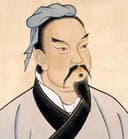
In the Art of War, I taught that supreme excellence lies in breaking the enemy's resistance without fighting, yet here I observe Pyongyang's words as sharpened arrows, probing Tokyo's defenses in a dance of deception and strength. The historical enmity between these realms, like the ancient feuds of Warring States, underscores the folly of underestimating one's adversary; for in nuclear pursuits, as in all strategy, one must know when to feign weakness or display might to secure the high ground. Japan, ever vigilant, embodies the principle of knowing the terrain, recognizing that true victory comes from aligning with the Tao of international harmony rather than mere conquest. Alas, if these nations fail to master the indirect approach, the chaos of unresolved conflicts may engulf them, for war is the greatest art of illusion.

Immanuel Kant

Immanuel Kant

German Philosopher and Enlightenment Thinker · 1724–1804

Through the lens of my categorical imperative and the vision of perpetual peace, I contemplate this discord where North Korea's assertion of sovereign defense clashes with Japan's plea for denuclearization, revealing the moral abyss of nations treating one another as mere means. My treatise demands a federation of free states, bound by republican constitutions and cosmopolitan law, to curb such escalations born from historical grievances and self-interest. In this East Asian theater, where missiles and rhetoric threaten the universal right to security, I urge a path toward enlightened reason, where treaties supersede force and mutual respect fosters a league of peace. For only through the moral duty to treat humanity as an end in itself can these powers transcend the state of nature, achieving not fleeting truce, but enduring harmony for all mankind.