insurance

Washington State Officials Expose Pervasive Workers' Compensation Fraud Targeting Immigrant Labor

Attorney General Nick Brown issues a public alert regarding predatory practices against Spanish-speaking employees seeking benefits.

Washington's Attorney General warns of a widespread workers' compensation fraud scheme preying on Spanish-speaking employees, exploiting vulnerabilities.
By The Daily Nines Editorial Staff|June 5, 2026|3 Min Read
Washington State Officials Expose Pervasive Workers' Compensation Fraud Targeting Immigrant LaborBlack & White

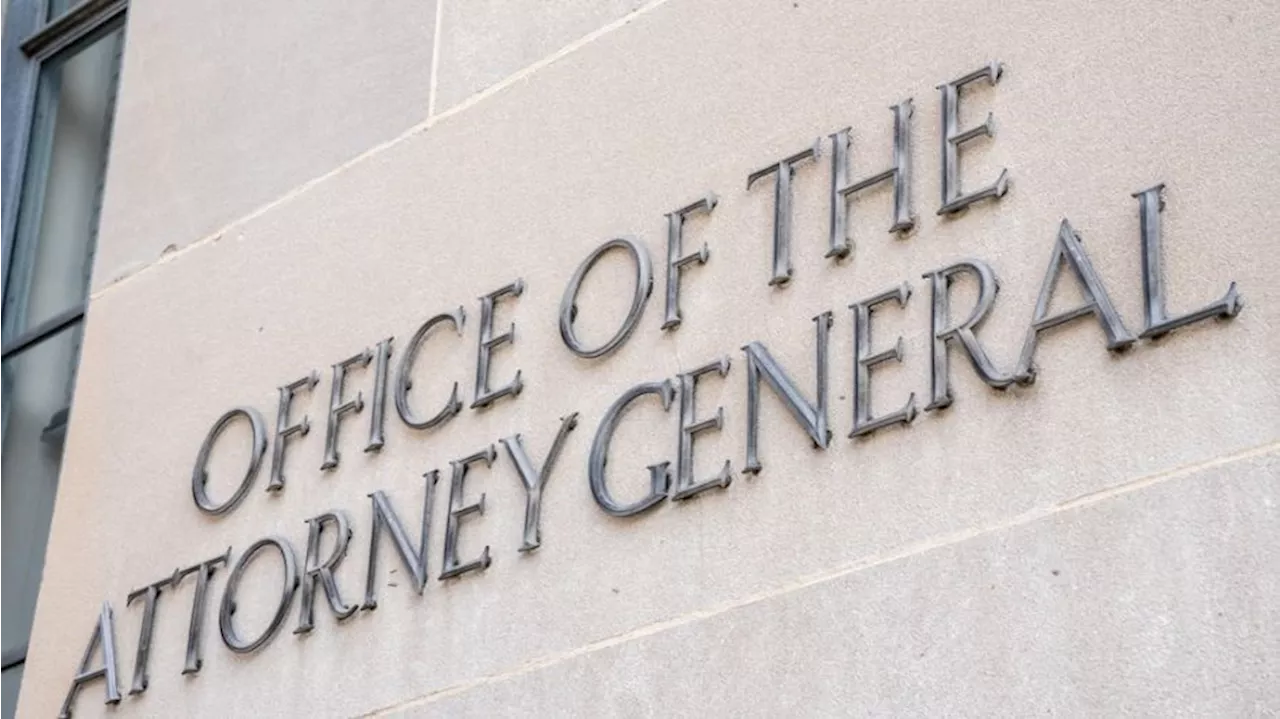
OLYMPIA, WA Washington State's Attorney General, Nick Brown, has issued a comprehensive public alert regarding a sophisticated workers' compensation fraud scheme specifically designed to exploit Spanish-speaking employees across the state. The warning, disseminated by state authorities, underscores mounting concerns over predatory practices targeting vulnerable populations seeking legitimate assistance for workplace injuries.

The elaborate deception, now under public scrutiny, reportedly involves individuals or groups posing as legal representatives or official entities, promising swift resolution to workers' compensation claims. These fraudsters capitalize on linguistic barriers and an unfamiliarity with the American legal system, often demanding exorbitant upfront fees for services that are either free or available at a significantly lower cost through official channels. The Attorney General's office highlighted that victims, often already facing economic hardship due to injury, are misled into believing these illicit services are their only recourse, further compounding their distress.

Amidst a backdrop of increasing vigilance against consumer fraud, this particular scheme draws parallels with historical patterns of exploitation targeting immigrant communities. Throughout history, new arrivals, often grappling with language differences and cultural adjustments, have unfortunately become susceptible to unscrupulous actors promising quick fixes for complex bureaucratic processes. This modern iteration, as detailed in a public advisory from Attorney General Nick Brown's office, reported by Headtopics, leverages similar vulnerabilities, creating a climate of distrust and fear among those most in need of protection.

The modus operandi typically involves unsolicited contact, either in person, via phone, or through deceptive online advertisements, all tailored to appear legitimate. Victims are often pressured into signing contracts or divulging personal information, which can then be used for identity theft or to file fraudulent claims without their full understanding. The immediate financial loss from these upfront fees is often just the beginning, as the fraudulent intervention can delay or even jeopardize legitimate workers' compensation claims, leaving injured laborers without the support they are legally entitled to.

Attorney General Brown's proactive stance is poised to bolster statewide efforts to educate and protect these communities. His office is urging Spanish-speaking residents, and indeed all citizens, to exercise extreme caution and to verify the credentials of anyone offering legal or claims assistance. Official state resources, such as the Department of Labor & Industries, provide free information and assistance for workers' compensation claims, emphasizing that no legitimate state agency or legal service will demand immediate payment for basic informational services or guaranteed outcomes.

This initiative not only seeks to dismantle the current fraudulent network but also aims to foster greater trust between immigrant communities and state institutions. By unveiling these deceptive practices, the Attorney General's office reinforces its commitment to ensuring equitable access to justice and protection under the law for every resident of Washington State. The ongoing investigation serves as a stark reminder of the persistent need for public awareness and collective action against those who seek to profit from the misfortunes of others.

Originally reported by Headtopics. Read the original article

In-Depth Insight

What history's greatest thinkers would say about this story

The Dialectical Debate

Adam Smith

Adam Smith

Lead Analysis

Professor of Moral Philosophy · 1723–1790

In the framework of natural liberty, markets thrive when participants can rely on transparent exchange and minimal deception. The reported scheme, wherein intermediaries extract upfront fees from injured workers under the guise of expedited claims, distorts the price mechanism that ordinarily signals legitimate services. Such practices raise transaction costs for vulnerable laborers already burdened by workplace injury, undermining the division of labor by deterring honest participation in the compensation system. When information asymmetries persist, particularly across linguistic lines, the invisible hand cannot allocate resources efficiently, leaving both claimants and the broader economy poorer.

Montesquieu

Montesquieu

Supporting View

Baron de La Brède et de Montesquieu · 1689–1755

To my colleague's point, the security of property and person depends upon moderate government and clear separation of powers. When private actors insert themselves between citizens and established public institutions such as the Department of Labor & Industries, they erode the intermediary bodies that Montesquieu deemed essential to liberty. The exploitation of linguistic barriers described in the advisory illustrates how inadequate safeguards against arbitrary exactions can transform a protective administrative apparatus into a source of fear, precisely the condition moderate laws are meant to prevent.

Jean-Jacques Rousseau

Jean-Jacques Rousseau

Counter-Argument

Citizen of Geneva · 1712–1778

I must respectfully disagree with the emphasis on market transparency alone. While commercial exchange may be orderly in principle, the social contract requires that institutions prevent the strong from preying upon the weak. The targeting of Spanish-speaking laborers, already disadvantaged by injury and unfamiliarity with procedures, reveals how formal equality before the law can mask profound inequalities of condition. True freedom demands active protection of the general will rather than reliance on self-correcting commerce that leaves the most vulnerable exposed to new forms of dependence.

Cross-Cultural Perspectives

Ibn Khaldun

Ibn Khaldun

Historian and Statesman · 1332–1406

Asabiyyah, the social cohesion binding communities, weakens when newcomers encounter systematic extraction rather than mutual support. The advisory's account of fraudsters leveraging language differences to impose fees mirrors the historical pattern in which rising dynasties lose solidarity once intermediaries exploit recent arrivals, eroding trust between ruler and ruled.

Aristotle

Aristotle

Philosopher · 384–322 BC

Justice in exchange requires proportionality and knowledge on both sides. When claimants cannot comprehend the terms offered, the mean between gain and loss is lost, converting a remedial process meant to restore injured workers into an instrument that compounds their disadvantage.

Voltaire

Voltaire

Writer and Philosopher · 1694–1778

Superstition and ignorance remain the surest allies of exploitation. The state advisory correctly urges verification through official channels, for only clear information disperses the darkness in which fraudulent promises of swift remedies flourish among those least equipped to distinguish legitimate authority from imposture.

Immanuel Kant

Immanuel Kant

Professor of Philosophy · 1724–1804

Treating persons merely as means violates the categorical imperative. Soliciting fees from injured workers who cannot fully grasp the transaction reduces them to instruments of another's enrichment, regardless of whether the underlying compensation system functions adequately.

Confucius

Confucius

Teacher · 551–479 BC

Rectification of names demands that those claiming authority truly embody it. When self-styled representatives demand payment for services the state provides freely, names and realities diverge, breeding disorder that ultimately harms both the vulnerable and the legitimacy of governing institutions.

The Socratic Interrogation

Questions for the reader:

1

If a society relies on formal procedures to protect injured workers yet leaves linguistic and informational barriers intact, has it fulfilled its duty to treat all citizens as ends rather than means?

2

When private actors profit from the very vulnerabilities that public institutions were designed to remedy, what balance between individual initiative and collective oversight best preserves both liberty and security?

3

Does the presence of fraud in compensation systems reveal a deeper failure of social trust, and if so, what reforms of character or law might restore the conditions under which honest exchange can flourish?

The Daily Nines uses AI to provide historical philosophical perspectives on modern news. These insights are intended for educational and analytical purposes and do not represent factual claims or the views of the companies mentioned.