debate

Centrist Democrats Unveil Economic Manifesto Amid Party Ideological Divide

New pledge by freshman lawmakers champions capitalist principles, challenging the progressive wing's growing influence.

Centrist Democrats launch a new pledge emphasizing capitalist ideals, directly challenging the party's progressive leanings and sparking internal debate.
By The Daily Nines Editorial Staff|June 4, 2026|2 Min Read
Centrist Democrats Unveil Economic Manifesto Amid Party Ideological DivideBlack & White

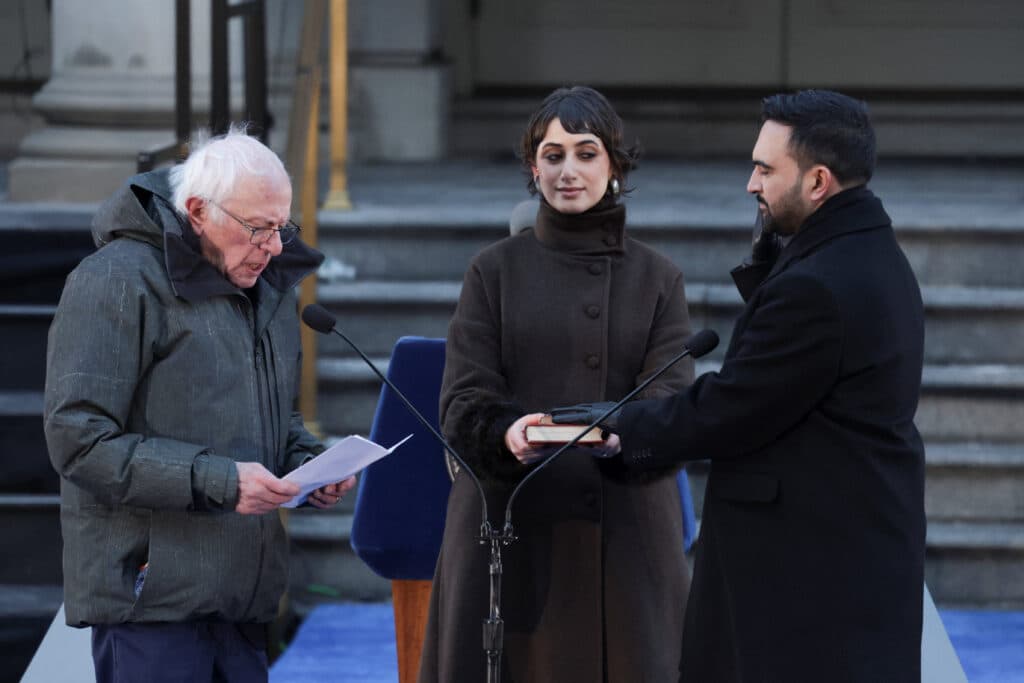
WASHINGTON, D.C. A significant ideological fault line within the Democratic Party has been sharply delineated this week with the unveiling of a new political pledge spearheaded by two freshman lawmakers. These representatives, who secured pivotal victories in constituencies traditionally favoring the opposition, are advocating a clear, centrist economic vision, declaring their allegiance to capitalist principles rather than socialist tenets.

This initiative, described by its proponents as a “politics of persuasion over purity,” signals a direct challenge to the progressive wing that has gained considerable influence within the party in recent years. The move by these newly elected members, whose electoral successes often hinge on appealing to broader, more moderate electorates, underscores a mounting concern among some Democrats regarding the party's perceived leftward drift.

The manifesto, designed to serve as a guiding framework for candidates, aims to bolster the position of moderates and offer an alternative narrative amidst ongoing debates about economic policy. While not explicitly naming any individuals or specific factions, the underlying message is a clear rejection of socialist policies that some within the party have embraced. The pledge champions free markets and individual enterprise, positioning itself as a bulwark against what it perceives as an ideological overreach from the party's left flank. News India Times initially reported on the launch of this significant political document.

The emergence of such a distinct centrist declaration is not without historical precedent in American political discourse. Major parties frequently experience internal struggles between their reformist and more conservative factions. From the New Deal era's debates within the Democratic Party to the rise of various ideological movements, the tension between different economic philosophies has consistently shaped electoral strategies and policy platforms. This current effort reflects an enduring debate about the most effective path to prosperity and social equity, particularly as the nation grapples with economic anxieties and global competition. The emphasis on “persuasion over purity” also echoes historical calls for broad coalition-building rather than strict adherence to ideological dogma, a strategy often seen as crucial for achieving national electoral majorities.

As the Democratic Party looks towards future electoral cycles, this fresh initiative is poised to intensify internal discussions about its core identity and strategic direction. The success or failure of this centrist rallying cry may ultimately shape the party's platform and its ability to connect with a diverse American electorate, determining the balance of power within its own ranks and, potentially, the national political landscape.

Originally reported by News India Times. Read the original article

In-Depth Insight

What history's greatest thinkers would say about this story

The Dialectical Debate

Seneca

Seneca

Lead Analysis

Stoic Philosopher · 4 BC–65 AD

The centrist pledge for free markets and individual enterprise reflects the Stoic pursuit of rational moderation amid factional excess. By favoring persuasion over ideological purity, these lawmakers echo the principle that true prosperity arises from measured judgment rather than zealous extremes. Economic policy, like personal conduct, benefits when anchored in practical virtue instead of abstract doctrines that risk fracturing the republic's cohesion.

Confucius

Confucius

Supporting View

Philosopher · 551–479 BC

To my colleague's point, the emphasis on persuasion over purity aligns with the rectification of names and harmonious governance. When political factions drift toward rigid tenets, whether socialist or otherwise, the state loses balance. The manifesto’s call for broader appeal among moderate electorates revives the ancient wisdom that effective rule rests upon moral suasion and coalition rather than doctrinal dominance.

Jean-Jacques Rousseau

Jean-Jacques Rousseau

Counter-Argument

Philosopher · 1712–1778

I must respectfully disagree. While moderation appears prudent, the pledge's defense of capitalist principles may merely mask the corruption of the general will by private interests. True liberty requires citizens to deliberate collectively on economic equity; championing free markets without addressing how they concentrate power risks subordinating the sovereign people to the very factions the manifesto claims to transcend.

Cross-Cultural Perspectives

Ibn Khaldun

Ibn Khaldun

Historian · 1332–1406

The internal party struggle between centrist and progressive wings illustrates the cyclical rise and decline of asabiyyah, or group solidarity. When a political body abandons the cohesive spirit that secured electoral victories in moderate districts, it invites fragmentation, much as dynasties weaken when luxury and ideological excess erode their founding unity.

Aristotle

Aristotle

Philosopher · 384–322 BC

The manifesto’s preference for free markets and individual enterprise recalls the mean between oligarchy and extreme democracy. A polity thrives when property and commerce remain widely distributed rather than concentrated, allowing the middle elements to stabilize the whole against the destabilizing demands of either radical redistribution or unchecked accumulation.

Voltaire

Voltaire

Philosopher · 1694–1778

The appeal to persuasion rather than purity echoes the Enlightenment defense of toleration in economic matters. By rejecting socialist tenets while affirming capitalist principles, the centrists advance a pragmatic skepticism toward dogmatic planning, favoring instead the liberty of enterprise that historically enlarges the sphere of individual reason and commerce.

Georg Wilhelm Friedrich Hegel

Georg Wilhelm Friedrich Hegel

Philosopher · 1770–1831

This centrist initiative represents a dialectical moment in which the party’s abstract progressive thesis confronts its concrete electoral antithesis. The resulting synthesis, grounded in free markets tempered by persuasion, may advance the rational development of the state, provided it does not merely reconcile but genuinely sublates the tension between equity and enterprise.

John Stuart Mill

John Stuart Mill

Philosopher · 1806–1873

The manifesto’s championing of individual enterprise against socialist overreach aligns with the principle that liberty thrives when economic activity remains open to experiment and personal initiative. Yet lasting progress requires that such liberty be joined with safeguards ensuring the marketplace does not stifle the higher faculties of those it claims to emancipate.

The Socratic Interrogation

Questions for the reader:

1

Does the pursuit of electoral majorities through persuasion inevitably dilute the moral clarity required for genuine economic justice?

2

When parties temper ideological commitments to secure broader coalitions, do they strengthen or erode the citizen’s capacity for independent judgment in economic affairs?

3

Can a political order founded on free markets and individual enterprise sustain the common good without periodically reexamining how those markets distribute power and opportunity?

The Daily Nines uses AI to provide historical philosophical perspectives on modern news. These insights are intended for educational and analytical purposes and do not represent factual claims or the views of the companies mentioned.