Florida Governor's Terror Designation Draws Swift Legal Challenge
Executive order targeting CAIR and Muslim Brotherhood sparks constitutional debate over state authority and civil liberties.
Florida Gov. Ron DeSantis's designation of CAIR and the Muslim Brotherhood as 'terrorist organizations' faces immediate legal challenges.
 Black & White
TALLAHASSEE — Florida Governor Ron DeSantis **unveiled** an executive order in December, controversially designating the Council on American-Islamic Relations (CAIR) and the Muslim Brotherhood as "terrorist organizations." This unprecedented state-level action has immediately drawn **mounting** legal challenges and ignited a fervent debate over the boundaries of executive authority and fundamental civil liberties.
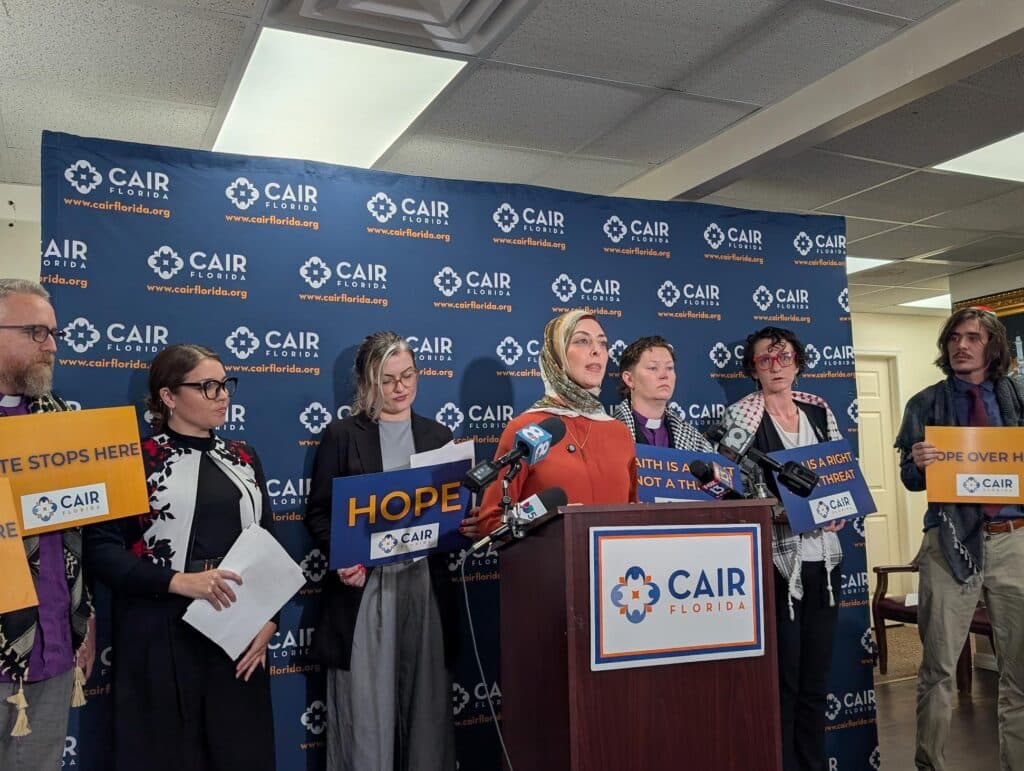
The gubernatorial decree mandates the Florida Department of Law Enforcement to undertake "all lawful measures" to thwart illicit activities by these groups. Furthermore, it explicitly prohibits all executive agencies from providing "any person known to have provided material support" to either organization. CAIR, a prominent national Muslim civil rights and advocacy organization, swiftly condemned the designation as unconstitutional and discriminatory, announcing its intent to pursue comprehensive legal recourse against the state.
Proponents of the executive action frequently cite concerns regarding alleged historical ties of the Muslim Brotherhood to extremist ideologies and claims of CAIR's purported links to Hamas, a designated foreign terrorist organization by the U.S. government. These assertions have been echoed by various research institutions and political figures, as detailed in reports, including those from outlets like Pampa News. However, critics vehemently argue that a state governor's designation of a domestic civil rights group oversteps federal jurisdiction on foreign policy and counter-terrorism, potentially infringing upon First Amendment rights of free speech and association. The order's broad language, particularly concerning "material support," has intensified **scrutiny**, raising fears of a chilling effect on legitimate advocacy and charitable activities within the Muslim community across the state.
This executive action is not an isolated incident but rather **underscores** a broader national and international discourse surrounding the delicate balance between security measures and civil liberties, particularly in the post-9/11 era. Similar debates have unfolded at the federal level regarding the criteria for designating organizations as terrorist entities and the due process afforded to those accused. The Florida directive, however, ventures into unprecedented territory for a state government, effectively attempting to assert foreign policy prerogatives typically reserved for the U.S. federal government. It **bolstered** the perception among some that state executives are increasingly willing to wade into complex geopolitical issues. The legal battle ahead is **poised** to test the constitutional boundaries of gubernatorial power and could establish a significant precedent for how states interact with civil society organizations deemed controversial.
As the legal confrontation unfolds **amid** widespread national attention, the case will undoubtedly face intense judicial scrutiny. Its outcome carries profound implications for religious freedom, free expression, and the constitutional separation of powers within the United States. The ruling is expected to reverberate far beyond Florida's borders, shaping future debates on state authority in matters of national security and civil rights.
Further Reading
Prime Minister's Diversity Remarks Spark National Identity Debate
Prime Minister's recent statements on Muslim contributions to modern Britain ignite a national debate on diversity, integration, and national identity.
International Fraudster Sentenced After Elaborate Border Deception
A Romanian man receives an 18-month sentence for EBT fraud after faking injuries in a Mexican ambulance to enter the U.S., highlighting national vulnerabilities
Pope Leo XIV Navigates Complex Migration Imperative
Pope Leo XIV urges Spanish leaders to welcome migrants while also supporting their ability to remain in their home countries.