Florida Governor's Terror Designation Draws Vigorous Challenge
Executive Order Targeting Muslim Advocacy Group Sparks Legal Battle and Civil Liberties Concerns
Florida Governor Ron DeSantis's executive order designating CAIR as a terrorist organization faces legal challenge, raising questions about civil liberties.
 Black & White
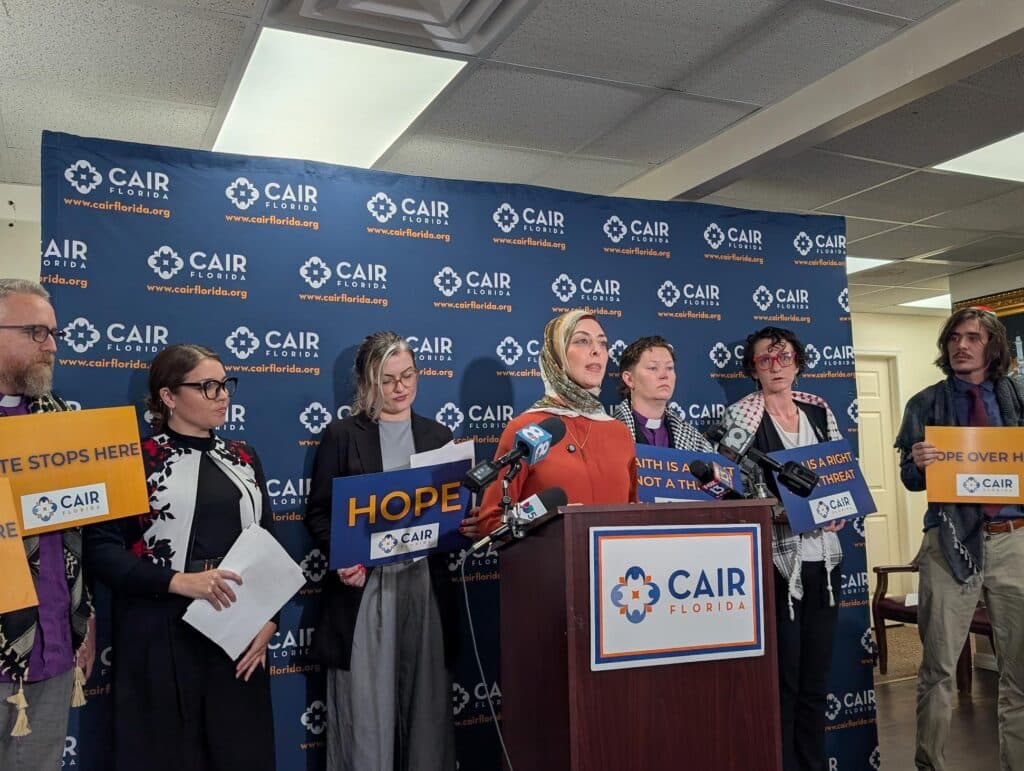
TALLAHASSEE — Florida’s Governor, Ron DeSantis, faces a robust legal challenge following his December executive order that controversially branded the Council on American-Islamic Relations (CAIR) and the Muslim Brotherhood as entities supporting terrorism. This state-level declaration, which mandates stringent measures against these organizations, has ignited a fierce debate over executive authority and civil liberties, prompting immediate legal action from CAIR.
The executive action, formally issued in late 2023, directs the Florida Department of Law Enforcement to initiate all permissible strategies to thwart illicit activities by the named groups. Furthermore, it compels all state executive agencies to cease engagement with any individual or entity implicated in providing substantial assistance to these organizations. The Governor's office has bolstered its stance, asserting that the move is intended to safeguard the state from what it perceives as threats linked to foreign extremist ideologies, aligning with broader concerns articulated about groups like Hamas and the enforcement of Sharia law.
CAIR, a prominent Muslim civil rights and advocacy organization, swiftly condemned the Governor's decree as an unconstitutional overreach. The group has since filed a lawsuit, arguing that the executive order infringes upon fundamental rights, including freedom of speech and association, and unlawfully targets a religious minority. This legal maneuver places the Governor’s power under intense scrutiny, particularly concerning the designation of organizations not formally recognized as terrorist entities by the federal government. The organization maintains that it is a legitimate civil rights advocate and that the designation is baseless and discriminatory.
Amid mounting national discourse on the intersection of national security and civil rights, Governor DeSantis's directive has underscored a growing tension between state-level assertions of authority and established federal protocols for identifying terrorist organizations. While the U.S. government maintains its own list of designated foreign terrorist organizations, neither CAIR nor the Muslim Brotherhood is currently on this federal roster. This discrepancy has fueled arguments that the Governor’s order ventures into areas traditionally reserved for federal foreign policy and national security apparatuses, potentially setting a problematic precedent for other states. Reports, including those published by *The Bradenton Times*, have highlighted the complexities and various viewpoints surrounding this unprecedented state action.
The legal battle is poised to examine the scope of gubernatorial powers and the constitutional protections afforded to advocacy groups. Critics contend that such state-level designations could have a chilling effect on legitimate political and religious expression, potentially marginalizing communities and stifling dissent. The unfolding legal proceedings will undoubtedly shape the future landscape of civil liberties and state oversight in Florida and could influence similar legislative or executive actions nationwide. The outcome is anticipated to have significant ramifications for the balance of power between state governments and individual rights, particularly concerning the autonomy of advocacy organizations.
Further Reading
Prime Minister's Diversity Remarks Spark National Identity Debate
Prime Minister's recent statements on Muslim contributions to modern Britain ignite a national debate on diversity, integration, and national identity.
International Fraudster Sentenced After Elaborate Border Deception
A Romanian man receives an 18-month sentence for EBT fraud after faking injuries in a Mexican ambulance to enter the U.S., highlighting national vulnerabilities
Pope Leo XIV Navigates Complex Migration Imperative
Pope Leo XIV urges Spanish leaders to welcome migrants while also supporting their ability to remain in their home countries.