Former Federal Reserve Chairman Alan Greenspan Dies at 100
His Two-Decade Stewardship Defined an Era of Economic Policy and Global Influence
Alan Greenspan, former Federal Reserve Chairman, has died at 100, leaving a complex legacy spanning two decades of economic policy.
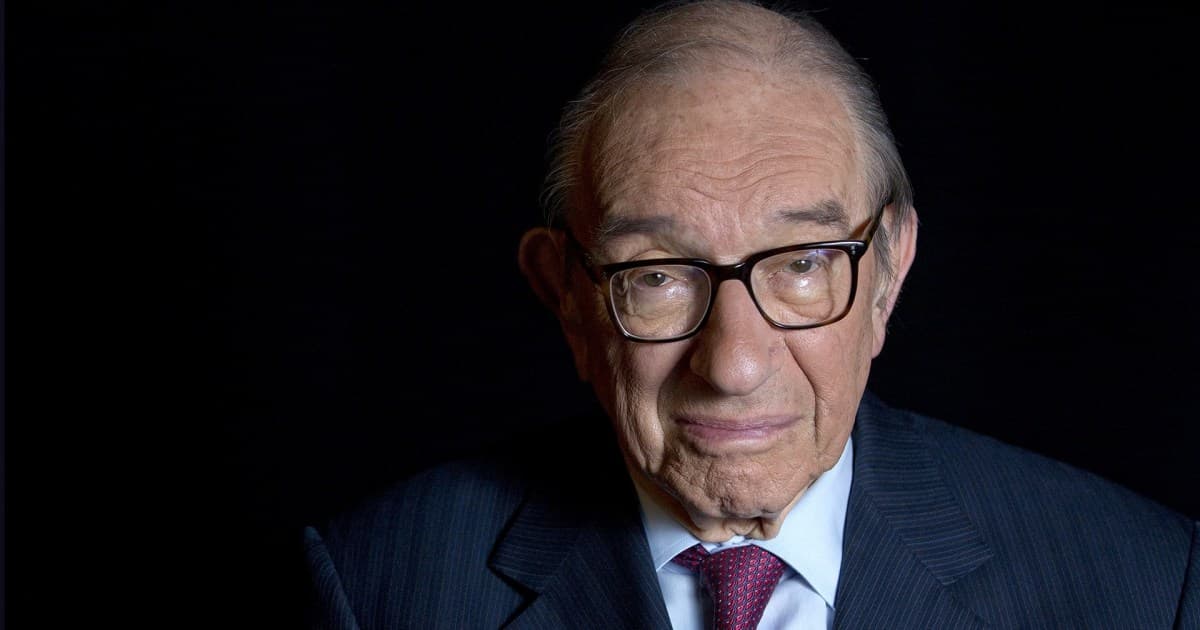 Black & White
WASHINGTON — Alan Greenspan, the towering figure who directed the United States Federal Reserve for nearly two decades, shaping global economic policy and navigating periods of profound financial upheaval, has passed away at the age of 100. His death marks the close of an influential chapter in modern economic history.
Appointed by President Ronald Reagan in 1987, Mr. Greenspan commenced his tenure just weeks before the dramatic stock market crash known as "Black Monday." Over the subsequent nineteen years, under the administrations of four presidents, he became synonymous with the central bank's power, earning the moniker "the Maestro" for his perceived ability to steer the American economy through turbulent waters. His era encompassed the savings and loan crisis, the Asian financial crisis, the bursting of the dot-com bubble, and the economic fallout following the September 11 attacks.
Throughout his long and distinguished career, Mr. Greenspan's policy decisions, particularly concerning interest rates, were watched with intense scrutiny by markets worldwide. He was widely credited for maintaining a period of sustained economic growth and low inflation during the 1990s. Yet, his legacy became increasingly complex following the 2008 global financial crisis, with critics suggesting his policies, particularly the prolonged period of low interest rates, may have inadvertently contributed to the housing bubble. News of his passing was widely reported, with outlets such as NBC News acknowledging his significant contributions and his marriage to esteemed broadcast journalist Andrea Mitchell.
Mr. Greenspan’s approach to monetary policy often underscored a belief in market self-correction, a philosophy that faced mounting challenges in the early 21st century. His leadership significantly bolstered the Federal Reserve’s public profile and perceived independence, establishing it as a preeminent force in global finance. He presided over a period when central banks increasingly took on a more active role in managing economic cycles. While many lauded his pragmatic responses to immediate crises, a retrospective re-evaluation of his full impact remains a subject of considerable academic and public debate.
As the world reflects on his extraordinary life, Alan Greenspan remains a figure whose influence on economic thought and policy is undeniable, a legacy poised to be continuously re-examined in the context of future financial landscapes.
Further Reading
Diplomatic Progress Reported in Iran Nuclear Talks
U.S. Senator J.D. Vance signals progress in Iran nuclear talks in Switzerland, with Tehran agreeing to IAEA inspector access.
Coastal Visitor Recounts Perilous Encounter with Rogue Wave
A woman's harrowing survival against a powerful 'sneaker wave' on the Oregon coast prompts renewed safety warnings, underscoring ocean's peril.
Obama Presidential Center Spurs Debate Over Legacy Institution's Evolving Role
The Obama Presidential Center's departure from traditional library models prompts critical discussion on the future of preserving presidential legacies.


