world

Obama Presidential Center Spurs Debate Over Legacy Institution's Evolving Role

Scholars and historians raise concerns regarding the shifting purpose of America's presidential libraries.

The Obama Presidential Center's departure from traditional library models prompts critical discussion on the future of preserving presidential legacies.
By The Daily Nines Editorial Staff|June 22, 2026|3 Min Read
Obama Presidential Center Spurs Debate Over Legacy Institution's Evolving RoleBlack & White

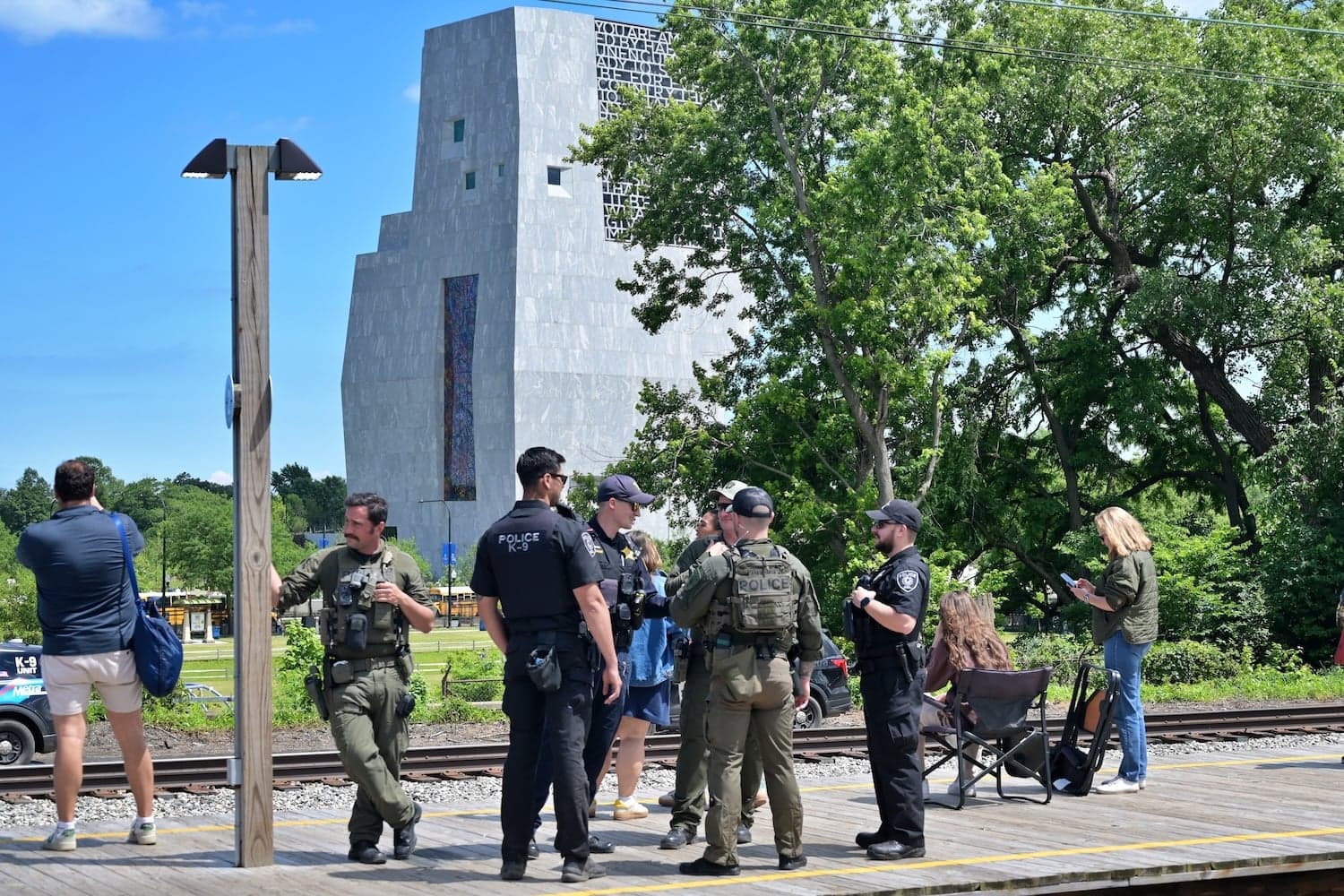
CHICAGO The impending inauguration of the Obama Presidential Center in Chicago has ignited a robust debate among historians, archivists, and public policy experts concerning the fundamental role and structure of presidential legacy institutions. This innovative complex, diverging significantly from the established model of a presidential library, is prompting widespread scrutiny over what constitutes the appropriate preservation and presentation of a former president’s tenure.

Traditionally, presidential libraries, administered by the National Archives and Records Administration (NARA), serve as repositories for official documents, artifacts, and scholarly research facilities, ensuring public access and historical transparency. These institutions have long been viewed as vital educational anchors, offering insights into American governance and presidential decision-making. However, the Obama Center's design, which emphasizes community engagement and programmatic initiatives over a conventional archival library, has introduced a novel paradigm that some critics argue could undermine these established functions.

Amidst the anticipation surrounding its completion, a mounting chorus of voices has expressed apprehension that this new approach may set a troubling precedent for future presidential projects. As highlighted in a recent analysis by *Foreign Policy* magazine, a core concern centers on the perceived fading of some of the basic, indispensable functions typically associated with presidential libraries. Critics contend that by prioritizing certain public-facing elements, the center risks diminishing the crucial academic and archival resources that have historically defined these institutions. The absence of a traditional federal library component, integrated fully with NARA, has particularly underscored these anxieties, raising questions about long-term accessibility to primary source materials.

This shift is not merely an architectural or programmatic choice; it touches upon the very philosophy of how presidential legacies are cataloged, interpreted, and made available for scholarly inquiry and public education. The traditional model, established with Franklin D. Roosevelt's library, sought to prevent the scattering of historical records, thereby bolstering the integrity of historical research. The move away from this comprehensive archival mandate, some argue, could potentially fragment the historical record, making it more challenging for future generations of historians and citizens to conduct thorough investigations into presidential administrations.

As the nation observes this evolving landscape, the discussion surrounding the Obama Presidential Center underscores a pivotal moment for America's approach to its past. The decisions made regarding its operational framework are poised to influence how presidential legacies are presented and preserved for decades to come, demanding careful consideration from policymakers and the public alike.

Originally reported by foreignpolicy.com. Read the original article

In-Depth Insight

What history's greatest thinkers would say about this story

The Dialectical Debate

A

Aristotle

Lead Analysis

Philosopher · 384–322 BC

In examining the transformation of presidential legacy institutions, one must consider their function within the polity as mechanisms for preserving practical wisdom and enabling citizens to deliberate upon past actions. The shift toward community engagement over archival rigor risks undermining the habituation of virtue through study of concrete governance. Institutions that once served as repositories for records now emphasize programmatic activity, potentially diminishing the capacity for phronesis among future generations who require access to primary materials to judge rightly.

A

Alexis de Tocqueville

Supporting View

Historian and Political Thinker · 1805–1859

To my colleague's point on the educational role of such institutions, the American republic has long depended upon decentralized associations and accessible records to sustain democratic habits. When legacy centers move away from integrated federal archives toward independent programmatic models, they may weaken the shared historical memory that prevents tyranny of the majority. Building upon this foundation, the emphasis on public initiatives could foster civic participation yet risks fragmenting the documentary basis upon which informed self-government rests.

I

Ibn Khaldun

Counter-Argument

Historian and Sociologist · 1332–1406

I must respectfully disagree that archival completeness alone sustains civilizational continuity. While my esteemed colleagues focus on preservation, dynastic institutions often decline when they lose asabiyyah through over-specialization or detachment from the people they claim to serve. The move toward community engagement may represent a necessary adaptation that renews group solidarity rather than a mere loss of scholarly function, provided the new form maintains genuine transmission of knowledge across generations.

Cross-Cultural Perspectives

A

Al-Ghazali

Theologian and Philosopher · 1058–1111

From the perspective of seeking truth amid worldly institutions, the debate reveals a tension between outward forms of legacy and inner preservation of knowledge. When centers prioritize engagement over systematic record-keeping, they may obscure the path to understanding past intentions, requiring careful discernment to separate beneficial community programs from the risk of neglecting rigorous historical inquiry.

P

Plato

Philosopher · 427–347 BC

Considering the ideal city and its guardians, the proper ordering of memory through institutions prevents the corruption of the historical record into mere opinion. The departure from centralized archives toward localized initiatives could fragment the unified vision necessary for citizens to grasp the whole of governance, favoring appearances of participation over the reality of informed judgment.

Voltaire

Voltaire

Writer and Philosopher · 1694–1778

Enlightened inquiry demands that records remain open to critical examination rather than curated for public display alone. Shifting presidential centers toward programmatic emphasis may advance certain social aims yet threatens to replace dispassionate scholarship with selective narratives, undermining the liberty of future minds to judge administrations through unfiltered evidence.

G

Georg Wilhelm Friedrich Hegel

Philosopher · 1770–1831

History unfolds through the dialectical development of spirit, and institutions serve as moments in that process. The evolution from traditional libraries to engagement-focused centers reflects a necessary negation that could advance collective self-consciousness, provided the new forms retain the rational content of past records within a higher synthesis rather than discarding archival foundations.

Confucius

Confucius

Philosopher · 551–479 BC

Rectification of names and transmission of rites require that institutions faithfully preserve the records of governance to instruct rulers and subjects alike. When legacy centers favor contemporary programs over archival integrity, they risk disordering the continuity between past virtue and present conduct, weakening the moral foundation upon which harmonious society depends.

The Socratic Interrogation

Questions for the reader:

1

If institutions tasked with preserving the past increasingly emphasize present engagement, what becomes of the citizen's capacity to judge leaders through unmediated evidence rather than curated interpretation?

2

Does the fragmentation of historical records into independent centers strengthen democratic participation or erode the common foundation necessary for collective self-understanding across generations?

3

When the transmission of political memory shifts from public archives to private programmatic models, how should a society balance innovation in legacy presentation against the enduring need for transparent accountability to history?

The Daily Nines uses AI to provide historical philosophical perspectives on modern news. These insights are intended for educational and analytical purposes and do not represent factual claims or the views of the companies mentioned.