world

NYPD Officer Fires Weapon During Bronx Stolen Car Pursuit

Incident Injures Multiple Officers, Ignites Debate Over Use of Force and Surveillance Technology

An NYPD officer shot a suspect fleeing in a stolen vehicle in the Bronx, injuring multiple officers and prompting scrutiny of police tactics.
By The Daily Nines Editorial Staff|June 22, 2026|3 Min Read
NYPD Officer Fires Weapon During Bronx Stolen Car PursuitBlack & White

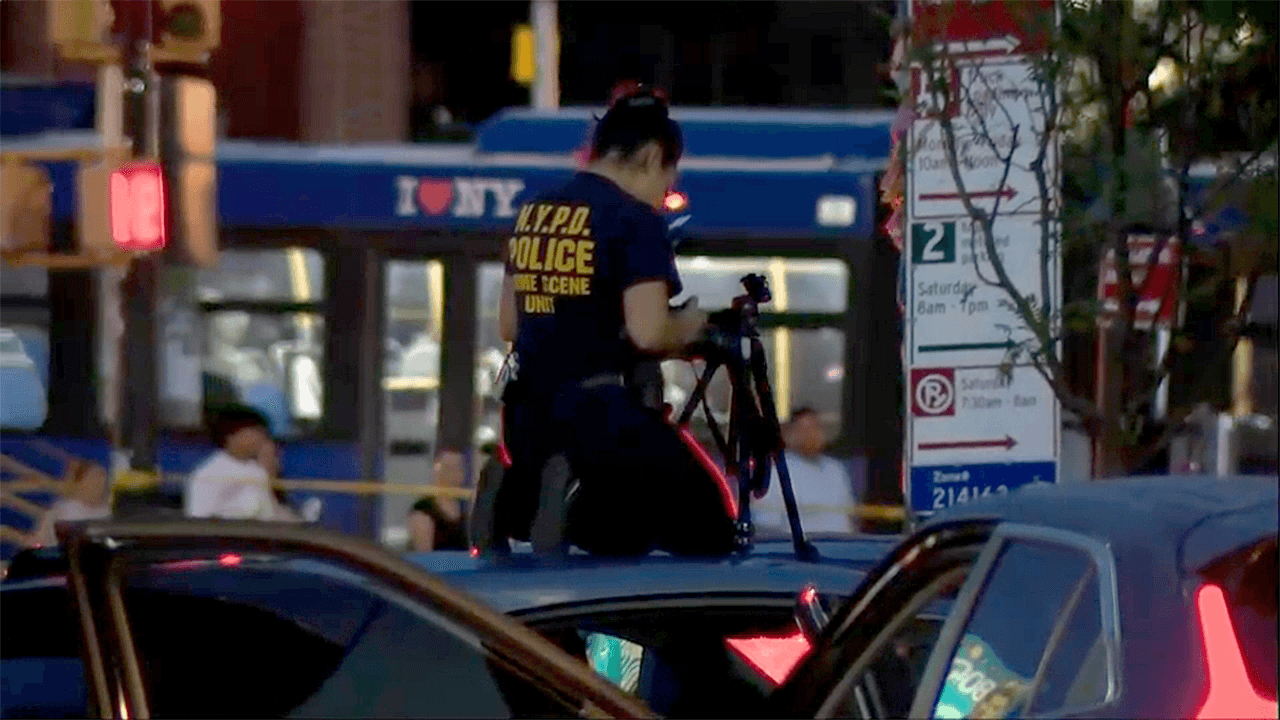
NEW YORK A tense confrontation in the Bronx culminated yesterday in an NYPD officer discharging a firearm, wounding a suspect who was allegedly attempting to flee in a stolen vehicle after striking several officers. The incident, unfolding amid a citywide focus on rising vehicular crime, has immediately drawn scrutiny to police protocols and the inherent dangers faced by law enforcement personnel.

The sequence of events began when a stolen Kia Sportage, identified through the city's extensive network of license plate readers, was tracked to an area in the Bronx. Officers moved to intercept the vehicle, a common procedure bolstered by the increasing sophistication of urban surveillance systems aimed at combating property crime.

According to initial reports, including those cited by Foxnews.com, as officers approached the vehicle, the driver reportedly attempted to evade apprehension, allegedly striking multiple officers in the process. It was during this perilous maneuver that one officer discharged their weapon, incapacitating the driver and bringing the dangerous pursuit to an end.

The injured suspect was promptly transported to a local medical facility, where their condition remains under observation. The officers who sustained injuries during the encounter also received medical attention, with details regarding the severity of their conditions yet to be fully disclosed by the department. Their quick actions, however, underscored the unpredictable nature of police work.

This incident highlights the complex challenges confronting urban police forces, particularly in managing high-stakes vehicle pursuits. The deployment of license plate reader technology has been widely credited with aiding in the recovery of stolen vehicles and the apprehension of suspects, yet it simultaneously sets the stage for potentially volatile interactions between law enforcement and individuals attempting to evade capture.

The use of force by law enforcement officers consistently remains a subject of intense public debate and internal departmental review. Each such incident prompts a renewed examination of training, de-escalation tactics, and the precise circumstances under which deadly force is deemed justifiable. The NYPD, like many major metropolitan police departments, operates under stringent guidelines designed to balance public safety with individual rights, though these situations often unfold with rapid, unpredictable velocity.

Mounting concerns over car thefts, particularly of specific models like Kias and Hyundais, have led to increased police vigilance and proactive measures. This trend, exacerbated by viral social media challenges demonstrating how to hotwire certain models, has created a significant public safety and property crime issue across the nation.

An internal investigation has been launched by the NYPD's Force Investigation Division, a standard procedure following any officer-involved shooting. This inquiry will meticulously examine all facets of the incident, from the initial tracking of the vehicle to the moments leading up to the discharge of the firearm. The findings will be crucial in informing future policy and potentially shaping public perception of police conduct. The suspect, once medically cleared, is poised to face a litany of charges relating to grand larceny, assault on a police officer, and reckless endangerment.

Originally reported by foxnews.com. Read the original article

In-Depth Insight

What history's greatest thinkers would say about this story

The Dialectical Debate

A

Aristotle

Lead Analysis

Philosopher · 384–322 BC

In considering the discharge of a weapon during the interception of a stolen vehicle that struck officers, one must examine the act through the lens of practical wisdom and the mean between excess and deficiency. The officer's response reflects an attempt to restore order where property crime threatens the common good, yet the use of lethal force demands that it serve justice rather than mere preservation of authority. True virtue lies not in reflexive action but in deliberation calibrated to the circumstances, balancing the safety of the polis against the risk of disproportionate harm.

A

Alexis de Tocqueville

Supporting View

Historian and Political Thinker · 1805–1859

To my colleague's point on virtuous action, the incident further illustrates how centralized surveillance mechanisms, such as license plate readers, extend the reach of administrative power in democratic societies. While these tools aid in recovering stolen property and protecting citizens, they also concentrate authority in ways that may erode the habits of local self-government. The tension between efficient pursuit of offenders and the preservation of individual liberty remains a defining challenge, requiring constant vigilance lest public safety measures quietly transform the character of freedom itself.

I

Ibn Khaldun

Counter-Argument

Historian and Sociologist · 1332–1406

I must respectfully disagree with an emphasis solely on individual virtue or administrative balance. The event reveals the natural cycle wherein urban dynasties, having grown accustomed to luxury and weakened asabiyyah, rely increasingly on sophisticated instruments of control to maintain order against rising disorder. When surveillance provokes violent evasion and force is met with force, it signals the erosion of genuine social cohesion rather than its restoration; authority sustained by technology alone cannot long endure without renewed solidarity among the governed.

Cross-Cultural Perspectives

A

Al-Ghazali

Theologian and Philosopher · 1058–1111

From the standpoint of ethical discernment, the officer's decision to discharge a weapon during the vehicle's evasion raises questions of intention and necessity. True justice requires that force be exercised only when lesser means have failed and with full awareness of possible harm to both parties, lest the pursuit of security corrupt the soul through habitual reliance on coercion.

P

Plato

Philosopher · 427–348 BC

The use of license plate readers to track stolen vehicles exemplifies the guardians' necessary oversight of the city, yet it simultaneously risks transforming law enforcement into a class detached from the people it protects. When technology enables rapid intervention, the ideal city must still ensure that such power remains subordinate to wisdom rather than mere efficiency.

Voltaire

Voltaire

Writer and Philosopher · 1694–1778

One observes with interest how technological surveillance, deployed to curb property crimes such as the theft of vehicles, simultaneously invites scrutiny of the limits placed upon state power. Reason demands that procedures governing the use of force be transparent and subject to review, for secrecy in such matters invites abuse regardless of the immediate danger posed by fleeing suspects.

Immanuel Kant

Immanuel Kant

Philosopher · 1724–1804

The incident compels reflection on the categorical imperative: an officer's discharge of a weapon must be justifiable as a universal rule applicable to all similar encounters. Treating the suspect merely as a means to restore order violates the dignity inherent in every rational being, even when that individual has endangered others through reckless flight.

Confucius

Confucius

Philosopher · 551–479 BC

Rectification of names requires that those entrusted with maintaining order act in accordance with the virtues proper to their station. When officers confront a stolen vehicle that has struck their colleagues, the response must embody both firmness and humanity, for ritual propriety in the exercise of authority preserves harmony within the community far better than force alone.

The Socratic Interrogation

Questions for the reader:

1

If surveillance technology increases the likelihood of apprehending those who steal property, at what point does the resulting confrontation between citizen and authority cease to serve justice and instead perpetuate a cycle of mutual suspicion?

2

When an individual flees in a manner that endangers others, does the duty to protect the community justify the use of potentially lethal force, or must some higher principle of restraint always prevail regardless of immediate risk?

3

How should a society balance the imperative to recover stolen goods and ensure public safety against the possibility that routine deployment of tracking systems gradually erodes the trust necessary for genuine civic order?

The Daily Nines uses AI to provide historical philosophical perspectives on modern news. These insights are intended for educational and analytical purposes and do not represent factual claims or the views of the companies mentioned.