DeSantis Designates Muslim Groups as Terrorist Amid Legal Challenge
Florida Governor's executive order targeting CAIR and Muslim Brotherhood draws immediate condemnation and promises of judicial review.
Florida Gov. DeSantis labels CAIR and Muslim Brotherhood 'terrorist organizations,' sparking legal battle and civil rights concerns.
 Black & White
TALLAHASSEE — Florida Governor Ron DeSantis issued an executive order in December, officially designating the Council on American-Islamic Relations (CAIR) and the Muslim Brotherhood as “terrorist organizations” within the state. The move has **unveiled** a significant new front in the state’s approach to national security and civil liberties, immediately drawing **mounting** criticism from civil rights advocates and prompting promises of swift legal challenges.
The executive directive mandates the Florida Department of Law Enforcement to undertake all lawful measures to prevent unlawful activities by these groups. Furthermore, it requires all state executive agencies to cease providing any material support to individuals or entities known to be associated with either organization. This action **underscores** a widening ideological and legal debate regarding the scope of state gubernatorial authority in areas traditionally overseen by federal agencies.
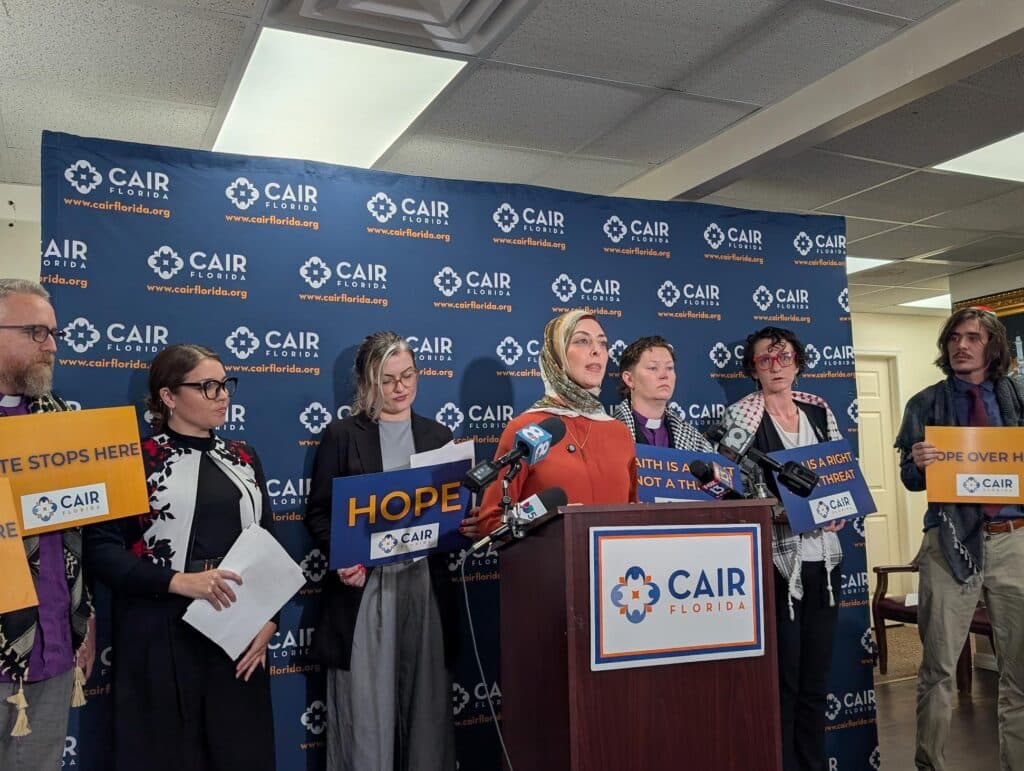
CAIR, a prominent Muslim civil rights and advocacy organization in the United States, swiftly condemned the governor's order as unconstitutional, discriminatory, and a direct assault on the fundamental rights of Muslim Americans. The organization has declared its intention to vigorously contest the designation in court, asserting that it infringes upon freedom of speech and religion. The Muslim Brotherhood, a transnational Islamist movement, has been designated as a terrorist entity by several countries, though its status remains debated and it is not federally designated as such in the United States.
Critics contend that the governor’s classification lacks federal consensus, as neither CAIR nor the Muslim Brotherhood holds a similar designation at the national level. This absence of federal backing has **bolstered** arguments from opponents who suggest the order is politically motivated rather than based on established legal criteria for terrorism. Legal scholars have raised concerns about the precedent such a state-level designation could set, potentially allowing states to bypass federal foreign policy and national security frameworks.
**Amid** intense **scrutiny** from legal experts and civil liberties organizations, CAIR is **poised** to challenge the order, arguing that it creates a chilling effect on legitimate advocacy and religious practice. The unfolding legal battle, which has been closely followed by outlets like the **East Texas News**, is expected to delve into complex questions surrounding state sovereignty, the definition of material support, and the protection of minority rights. The historical context of state actions impacting civil rights during periods of heightened security concerns also looms large over this contentious executive order.
The long-term ramifications of Governor DeSantis’s executive order remain uncertain, as the state prepares for a protracted legal confrontation. The outcome could significantly influence the legal landscape for advocacy groups and the balance of power between state and federal authorities in defining and combating terrorism within the United States.
Further Reading
Prime Minister's Diversity Remarks Spark National Identity Debate
Prime Minister's recent statements on Muslim contributions to modern Britain ignite a national debate on diversity, integration, and national identity.
International Fraudster Sentenced After Elaborate Border Deception
A Romanian man receives an 18-month sentence for EBT fraud after faking injuries in a Mexican ambulance to enter the U.S., highlighting national vulnerabilities
Pope Leo XIV Navigates Complex Migration Imperative
Pope Leo XIV urges Spanish leaders to welcome migrants while also supporting their ability to remain in their home countries.