Florida Governor Designates CAIR, Muslim Brotherhood as Terrorist Organizations
Executive order by Governor DeSantis sparks legal challenge and debate over state authority in national security matters.
Florida Governor Ron DeSantis's executive order designating CAIR and the Muslim Brotherhood as terrorist organizations draws swift legal opposition.
 Black & White
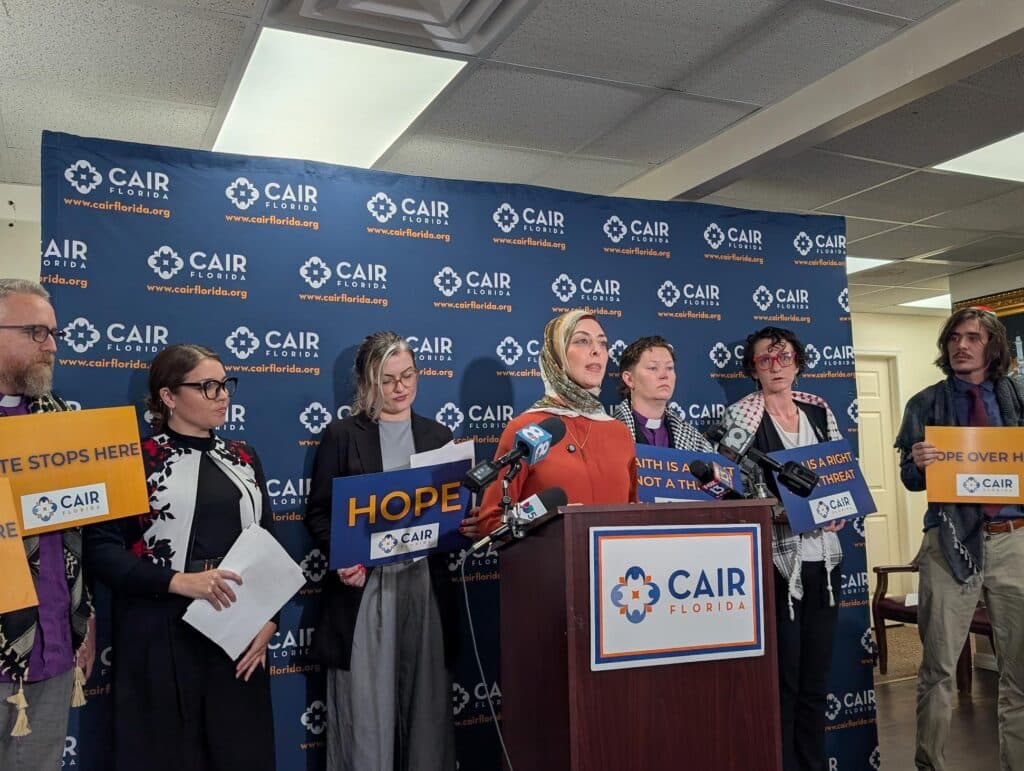
TALLAHASSEE — Florida Governor Ron DeSantis issued an executive order in December, unilaterally designating the Council on American-Islamic Relations (CAIR) and the Muslim Brotherhood as “terrorist organizations.” This unprecedented state-level action has ignited immediate legal challenges and widespread condemnation from civil liberties advocates and Muslim community leaders across the nation.
The directive, which tasks the Florida Department of Law Enforcement (FDLE) with undertaking all lawful measures to prevent unlawful activities by these entities, also prohibits executive agencies from engaging with or providing resources to any individual or entity deemed to have rendered substantial aid to these groups. The move places these organizations under a specific state-level scrutiny typically reserved for federal designations by the U.S. State Department or Treasury Department.
CAIR, a prominent Muslim civil rights and advocacy organization in the United States, swiftly announced its intention to pursue legal recourse, arguing the designation is unconstitutional, politically motivated, and lacks due process. The group contends that the governor’s authority does not extend to classifying organizations in a manner traditionally handled by federal intelligence and law enforcement agencies, thereby encroaching upon First Amendment protections of free association and speech.
Amid a politically charged landscape, Governor DeSantis’s administration has not yet detailed the specific criteria or evidence that *bolstered* this classification. Historically, such designations at the federal level involve extensive intelligence gathering and inter-agency consensus. The state’s action *underscores* a growing trend of states asserting authority in areas traditionally dominated by federal policy, particularly concerning national security and foreign relations.
The Muslim Brotherhood, an international Islamist movement, has faced varying levels of official recognition and opposition globally, with some nations designating it a terrorist entity while others do not. CAIR, by contrast, operates openly as a civil rights organization within the United States, advocating for the rights of American Muslims. The debate surrounding the governor's decision has been extensively covered, with reports, including those in The Gatesville Messenger, detailing the various arguments for and against the controversial classification.
Legal experts are now *poised* to scrutinize the executive order's constitutional viability, particularly regarding the separation of powers and the extent of a state governor's jurisdiction in foreign policy and national security matters. The *mounting* legal battle is expected to set a significant precedent for the limits of state executive authority and could have far-reaching implications for civil liberties and interfaith relations within Florida and beyond.
Further Reading
Prime Minister's Diversity Remarks Spark National Identity Debate
Prime Minister's recent statements on Muslim contributions to modern Britain ignite a national debate on diversity, integration, and national identity.
International Fraudster Sentenced After Elaborate Border Deception
A Romanian man receives an 18-month sentence for EBT fraud after faking injuries in a Mexican ambulance to enter the U.S., highlighting national vulnerabilities
Pope Leo XIV Navigates Complex Migration Imperative
Pope Leo XIV urges Spanish leaders to welcome migrants while also supporting their ability to remain in their home countries.