Florida Governor Designates Groups as Terrorist Entities
Executive Order Targeting Muslim Brotherhood and CAIR Sparks Immediate Legal Challenge and Constitutional Debate
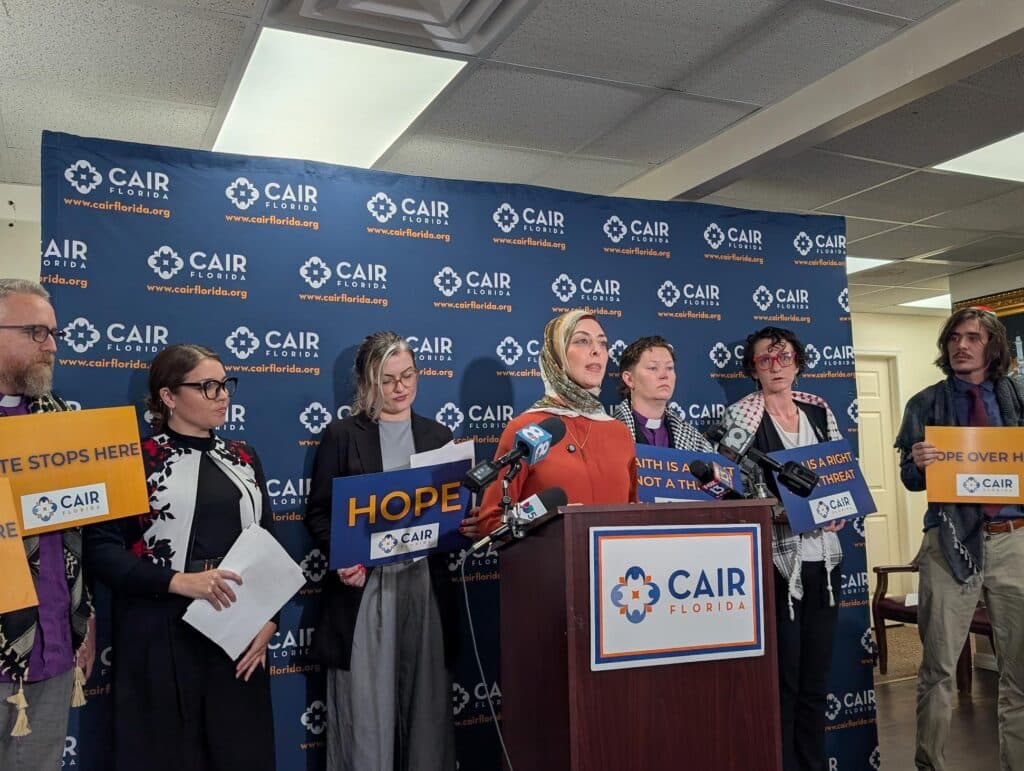
Florida Governor Ron DeSantis's executive order designating CAIR and the Muslim Brotherhood as terrorist organizations faces swift legal opposition.
 Black & White
MIAMI — Florida Governor Ron DeSantis, in a significant executive action last December, formally designated the Council on American-Islamic Relations (CAIR) and the Muslim Brotherhood as terrorist organizations within the state. The directive, which immediately drew intense scrutiny, mandates the Florida Department of Law Enforcement to undertake all lawful measures to prevent illicit activities by these entities and requires state agencies to prohibit any individual known to have provided material support from engaging with the state.
This controversial move by the governor, widely seen as an assertion of state power in matters typically reserved for federal oversight, has ignited a fierce debate over civil liberties and the limits of executive authority. CAIR, a prominent Muslim civil rights and advocacy group, swiftly announced its intention to challenge the executive order in court, characterizing the designation as unconstitutional and discriminatory.
Amid mounting legal challenges and public outcry, the executive order underscores a broader political climate marked by heightened tensions and renewed scrutiny of organizations with perceived links to foreign policy concerns. The governor's office has articulated the designation as a necessary step to safeguard the state from what it describes as groups that promote extremist ideologies. This stance has been bolstered by arguments from various commentators and advocacy groups, some of whom, as explored in publications such as *The Hot Springs Village Voice*, have previously highlighted historical controversies surrounding CAIR and its alleged ties to the Muslim Brotherhood, particularly concerning past federal investigations and unindicted co-conspirator designations in cases like the Holy Land Foundation trial.
The Muslim Brotherhood, an international Sunni Islamist organization, has a complex history and has faced varying levels of official opprobrium globally, with some nations designating it as a terrorist group while others maintain diplomatic relations. CAIR, founded in 1994, asserts its mission as advocating for the civil rights of American Muslims and promoting a positive image of Islam. The organization maintains that the state's designation is a politically motivated attack designed to marginalize and demonize an entire community.
The impending legal battle is poised to test the boundaries of a state governor's power to unilaterally label organizations as terrorist entities, a domain traditionally managed by the U.S. State Department and federal intelligence agencies. Experts suggest the case could set a significant precedent for how states approach perceived national security threats within their borders, potentially influencing future legislative and executive actions across the nation and further intensifying the ongoing dialogue between national security imperatives and protected freedoms.
Further Reading
Prime Minister's Diversity Remarks Spark National Identity Debate
Prime Minister's recent statements on Muslim contributions to modern Britain ignite a national debate on diversity, integration, and national identity.
International Fraudster Sentenced After Elaborate Border Deception
A Romanian man receives an 18-month sentence for EBT fraud after faking injuries in a Mexican ambulance to enter the U.S., highlighting national vulnerabilities
Pope Leo XIV Navigates Complex Migration Imperative
Pope Leo XIV urges Spanish leaders to welcome migrants while also supporting their ability to remain in their home countries.