Florida Governor Designates Muslim Groups as Terrorist Entities
Controversial executive order by DeSantis sparks legal challenges and ignites debate over state authority and civil liberties.
Florida Governor DeSantis designates CAIR and Muslim Brotherhood as terrorist groups, sparking legal battles and civil rights concerns across the state.
 Black & White
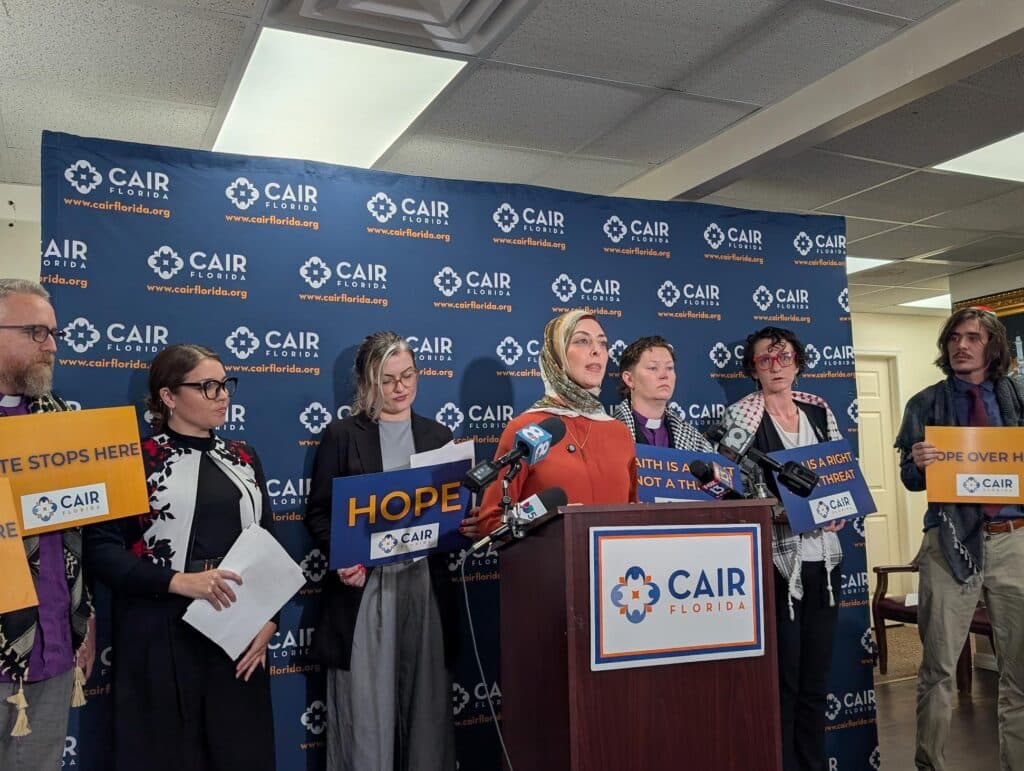
TALLAHASSEE — Florida Governor Ron DeSantis has sparked considerable debate and legal challenge following his December executive order, which unilaterally classified the Council on American-Islamic Relations (CAIR) and the Muslim Brotherhood as 'terrorist organizations' operating within the state. This unprecedented decree has drawn immediate condemnation from civil liberties advocates and Muslim American groups, setting the stage for a protracted legal confrontation over the state's authority to make such designations.
The directive mandates the Florida Department of Law Enforcement to pursue all lawful avenues to prevent illicit activities by these entities. Furthermore, it compels all state executive agencies to cease engagement with any individual or group found to have provided material assistance to either organization. CAIR, a prominent Muslim civil rights and advocacy organization, has vigorously contested the designation, asserting its role as a defender of constitutional rights. The Muslim Brotherhood, an older transnational Sunni Islamist organization, has faced varying degrees of scrutiny and proscription in different nations globally.
In response to the Governor's action, CAIR has initiated legal proceedings, arguing that the executive order infringes upon First Amendment rights to free association and due process, and oversteps state authority into areas typically reserved for federal designation of foreign terrorist organizations. The Governor's administration, however, has consistently defended the order, citing concerns over alleged ties between the designated groups and extremist ideologies. Proponents of the order often point to historical accusations and past controversies involving elements within or associated with these organizations, assertions frequently highlighted by sources such as the *Perryville Republic Monitor* in its recent coverage of the controversy.
This move by Governor DeSantis underscores a broader national and international debate regarding the classification of non-state actors and the balance between national security concerns and civil liberties. While the U.S. federal government maintains its own list of Specially Designated Global Terrorists, state-level designations of this nature are highly unusual and raise complex questions about jurisdiction and legal precedent. Critics warn that such state-level actions could set a dangerous precedent, potentially leading to the arbitrary targeting of religious or ethnic groups under the guise of security measures. The controversy also brings into sharp relief the differing perspectives on organizations like the Muslim Brotherhood, which has a long and complex history, influencing political and social movements across the Middle East for decades.
As the legal battle unfolds, the Florida courts are poised to weigh the executive branch's powers against fundamental constitutional protections. The outcome of this dispute will undoubtedly have significant ramifications, not only for the organizations directly affected but also for the future of civil rights advocacy and the delineation of state versus federal authority in matters of national security across the United States.
Further Reading
Prime Minister's Diversity Remarks Spark National Identity Debate
Prime Minister's recent statements on Muslim contributions to modern Britain ignite a national debate on diversity, integration, and national identity.
International Fraudster Sentenced After Elaborate Border Deception
A Romanian man receives an 18-month sentence for EBT fraud after faking injuries in a Mexican ambulance to enter the U.S., highlighting national vulnerabilities
Pope Leo XIV Navigates Complex Migration Imperative
Pope Leo XIV urges Spanish leaders to welcome migrants while also supporting their ability to remain in their home countries.